I’m continuing a last minute blog de force by continuing to document some odds and ends of 2020 that haven’t hit the dot com quite yet. This one harkens back to June, which might as well been a decade ago at this point.
For the past two years I’ve taught in Arezzo, Italy during the summer. When our study abroad class got cancelled we were forced to scramble to put together a course that the students could take if they still wanted to earn out course credit, so I went ahead and taught a fully online course for a portion of students during our June summer session.
The trick was that I needed to teach a class that was actually not the class I would have taught in Arezzo in the event that the students in the summer class wanted to also study abroad in 2021 (assuming that was a possibility). This meant that I needed to put together a fresh class. Two years ago, designed a course called the Art and Business of Media that I co-taught in Arezzo and then last year a taught Food Writing and Social Media. I opted for the business focused course in 2020 with the hopes of going back to Food Writing in 2021. Even though I had taught it before, I had to overhaul the course as the original design focused heavily on interacting with the local businesses in the community and using the Business Model Canvas as a mechanism for analyzing a local jewelry manufacturer.
This time around I decided that I wanted to focus more on understanding foundational business principles and less on analyzing business performance. In many ways, the course mirrored the outline of a “Business for Non Majors,” which are students have frequently requested, so this class was simply titled Business for Strategic Communication.
The unfortunate part with teaching business–or advertising for that matter–is that our courses are frequently built around planning rather than execution. For example, our advertising curriculum culminates in a capstone titled Advertising Campaigns. Students are asked to combine research, media planning, and advertising design skills in order to execute a full advertising. Similar business capstone courses require students to write a business plan. Don’t get me wrong, learning to plan out every detail is an incredibly valuable skill to have, but a part of what you do in the process of planning a business goes out the door once your business gets off the ground because you are forced to now adapt your business to market needs.
Similarly in advertising, much more focus is being spent on adapting campaigns–especially digital campaigns–in real time in order to improve returns on investment and decrease customer acquisition costs. To practice this, students would need both an actual business or organization that would allow be willing to actually hand over the reigns of their advertising including access to capital. Further, the lengths of the semester are simply rarely long enough to develop, execute, and evaluate a campaign. The alternative would be to use a simulation.
For awhile now I’ve wanted to integrate into my Intro to Advertising class a simulation experience that would allow them to see the full process of advertising, but those simulations that focus solely on advertising don’t exist. What do exist are plenty of business simulations that mimic not only the marketing process, but the soup to nuts development of a business. Business and financial simulations have been around for years and are heavily adopted in colleges of business (very rarely colleges of journalism and mass communication) and given the online nature of this course, this felt like the exact right time to finally jump on the opportunity to test it.
The simulation I landed on was from Marketplace Simulations and required students to start a bicycle company. In doing so, students:
- Analyze market, operational, and financial data
- Develop an initial business strategy
- Make a host of tactical decisions:
- Plan and roll out a marketing campaign
- Select and price brands to appeal to different market segments
- Select and develop distribution channels
- Devise advertising campaigns
- Schedule production and manage plant capacity
- Manage cash
- Compete head-to-head with other businesses
- Adjust strategy and tactics in response to operational and financial performance, competitive tactics, and customer needs
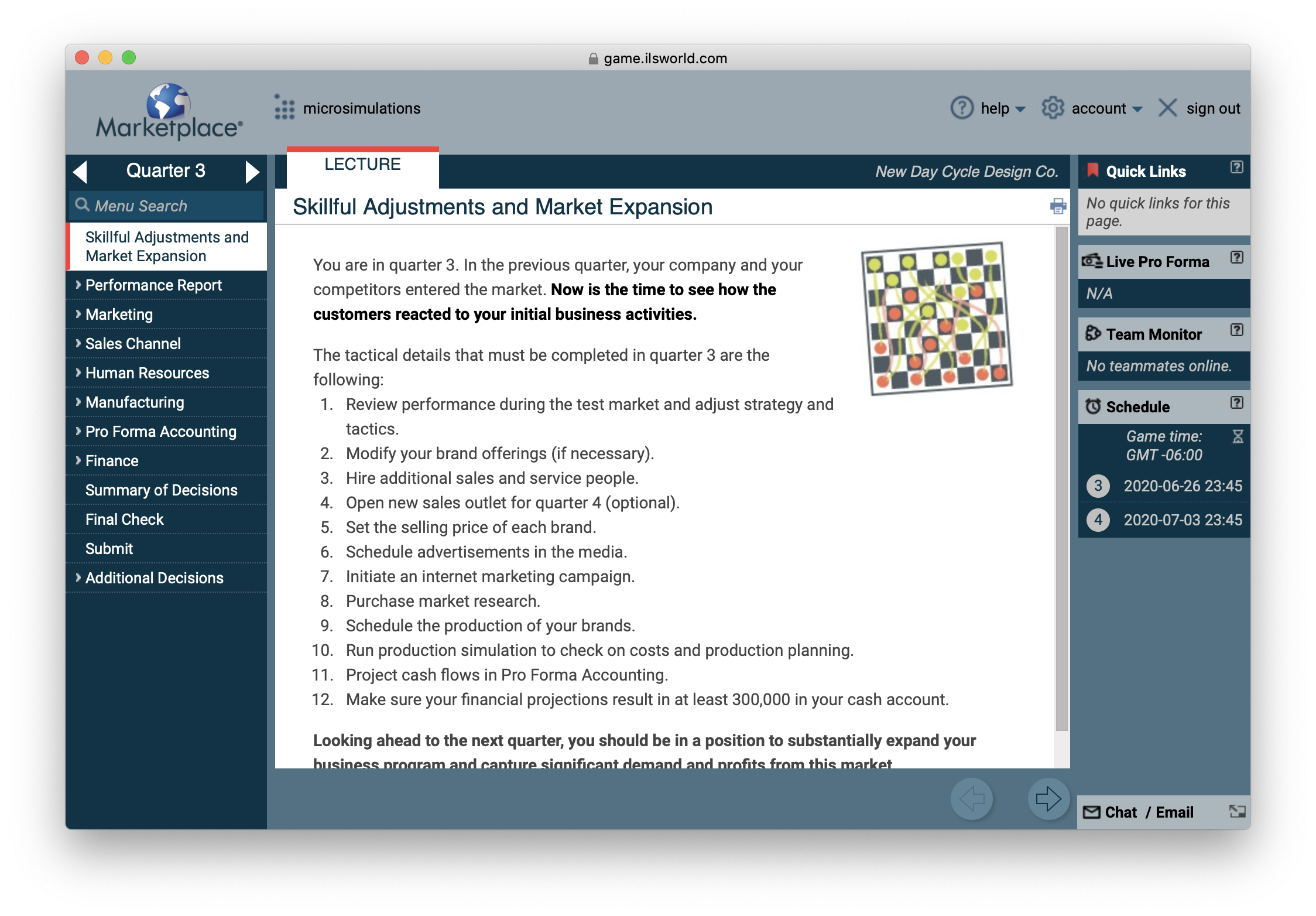
The simulation is broken up into four stages which coincide with the four quarters of a fiscal year. Each stage students complete a number of tasks that are fed into the simulation which will then give them feedback during the next phase about their position within the market. For Q1, students invest personal savings to start up the company, analyze market research, establish the firm’s strategic direction, and set up shop (build a plant, select a brand portfolio, and open sales outlets). Their results depend on the decisions they make such as purchases market research and investing enough capital in order to manufacture, distribute, and sell the bicycles.
To me, the real secret sauce of the simulation is that students are put into “worlds” and thus compete against each other. You can set it up to be against the CPU but I opted to have them compete as that would make for some interesting discussions later. Additionally, business performance mattered. I wanted to make sure that students spent a good amount of time in the simulation because that’s where the learning happens, so 30% of their grade would come from how well they performed against each other.
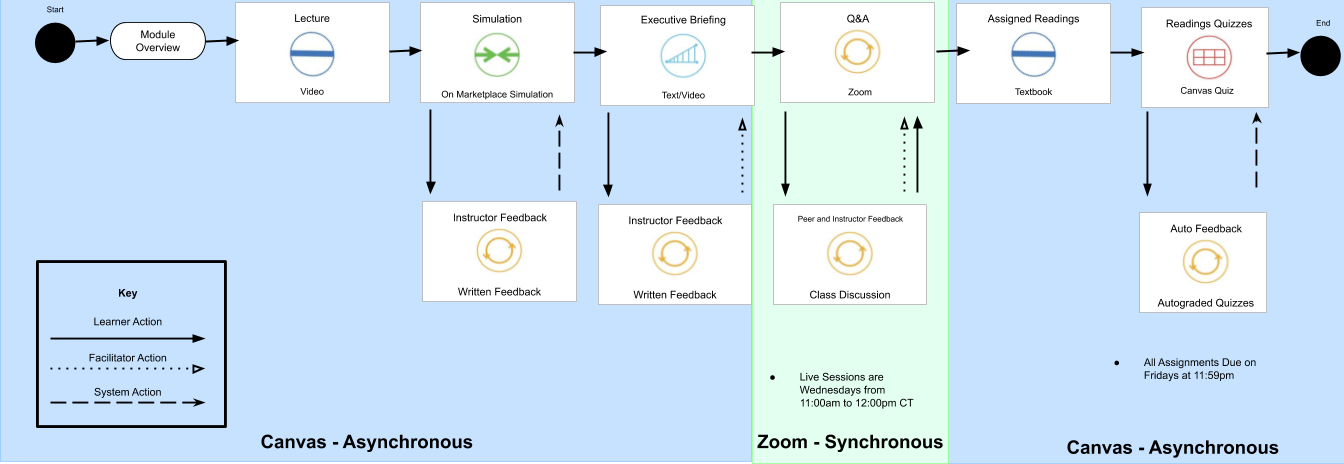
If I’ve learned anything about the first time you teach a new design, it’s to keep the design simple. This was a four-week course which lined up quite well with the four quarters design of the simulation. I built the course into four weekly modules, which included a straightforward design of watching some quick advice videos from me, playing the simulation, write a brief (paper, presentation, video, whatever) about their decisions, attending a live Q&A discussion session, readings, and a mixture of low and high stakes reading assessments.
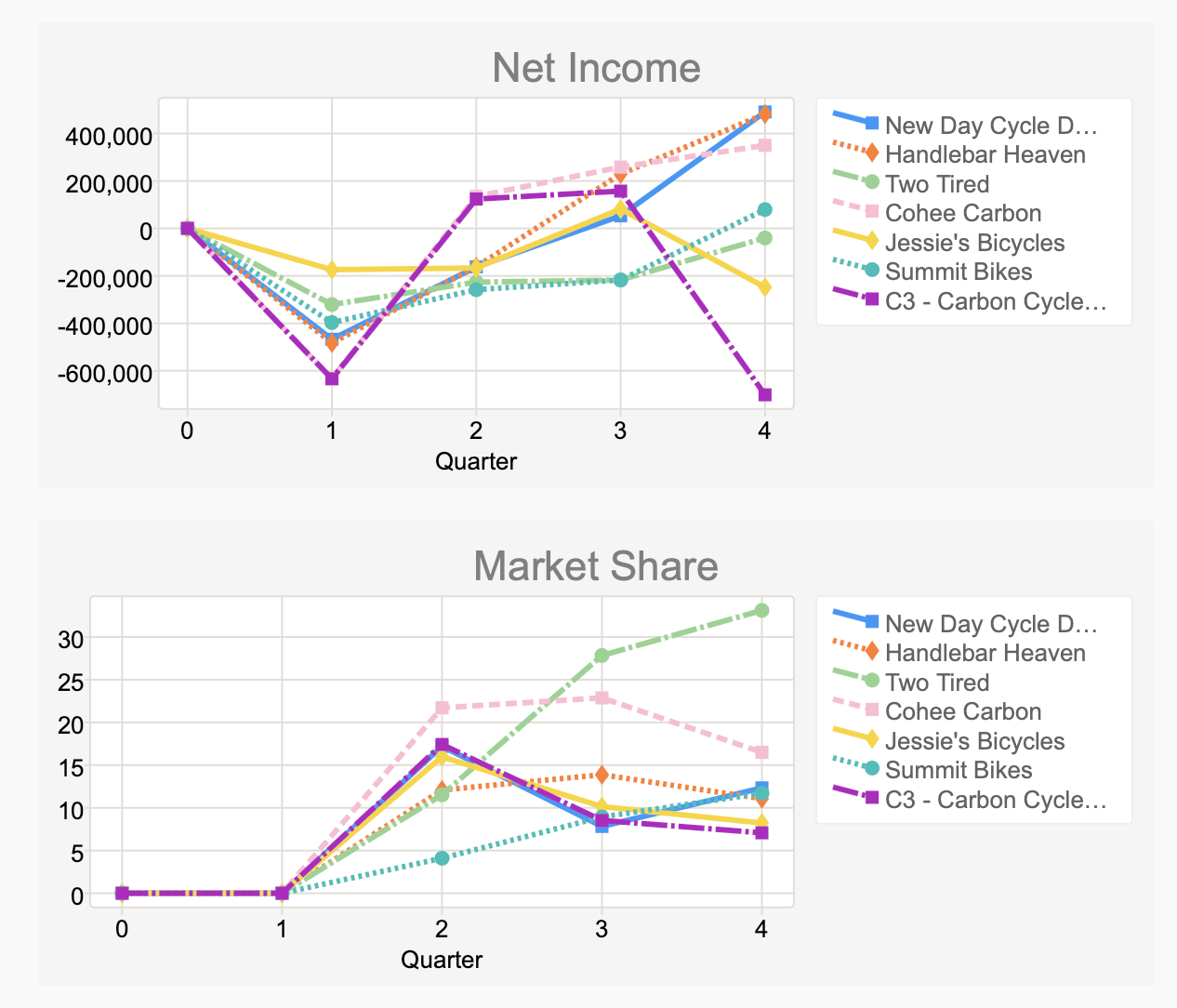
After each quarter, I could see some in-depth analysis as to how each student in the world was doing and then use that on top of their own personal reflections as data in order to develop feedback for the students.
As the “year” progressed, students could then make adjustments based off of both the feedback they received from me and the ways in which they interpreted specific pieces of data about market performance.
All in all, I feel like this was a really successful course design that students genuinely got a lot out of it even given the quick pivot of the course content. Several comments from students mentioned it:
The stimulation game we had to keep track of and run was extremely helpful and made the things we learned in lecture and the book make even more sense. We also had weekly zoom calls where he made sure we were on track and understood everything we needed to get.
This course was a great layout and i never felt rushed or stressed. The simulation was a great way of learning because it gave me a hands on experience at learning
In terms of the course itself, I very much enjoyed the business simulation game. The competitive aspect of it all kept me highly interested and because of that I feel that I learned more than I would have from a textbook.
The last comment I really appreciate because I could tell that students were initially hesitant to the competitive nature of the simulation, but I believe it paid off because it put students in a position that 1.) engages the student 2.) allows them multiple opportunities to iterate and progress 3.) mimics a real world economy and 4.) is genuinely unfamiliar. Students are often subjectively judged in planning contests, but rarely based off of pure performance. So I’m glad students eventually warmed up to it and leaned into it. In our discussions, one student in particular was telling me about how much time they were spending on it. After a slow start, they were now agonizing over every business decision.
I’m not sure the next time I’ll be teaching this class as it was sort of a circumstantial one-off, but hopefully it will be something I can come back to into the future.
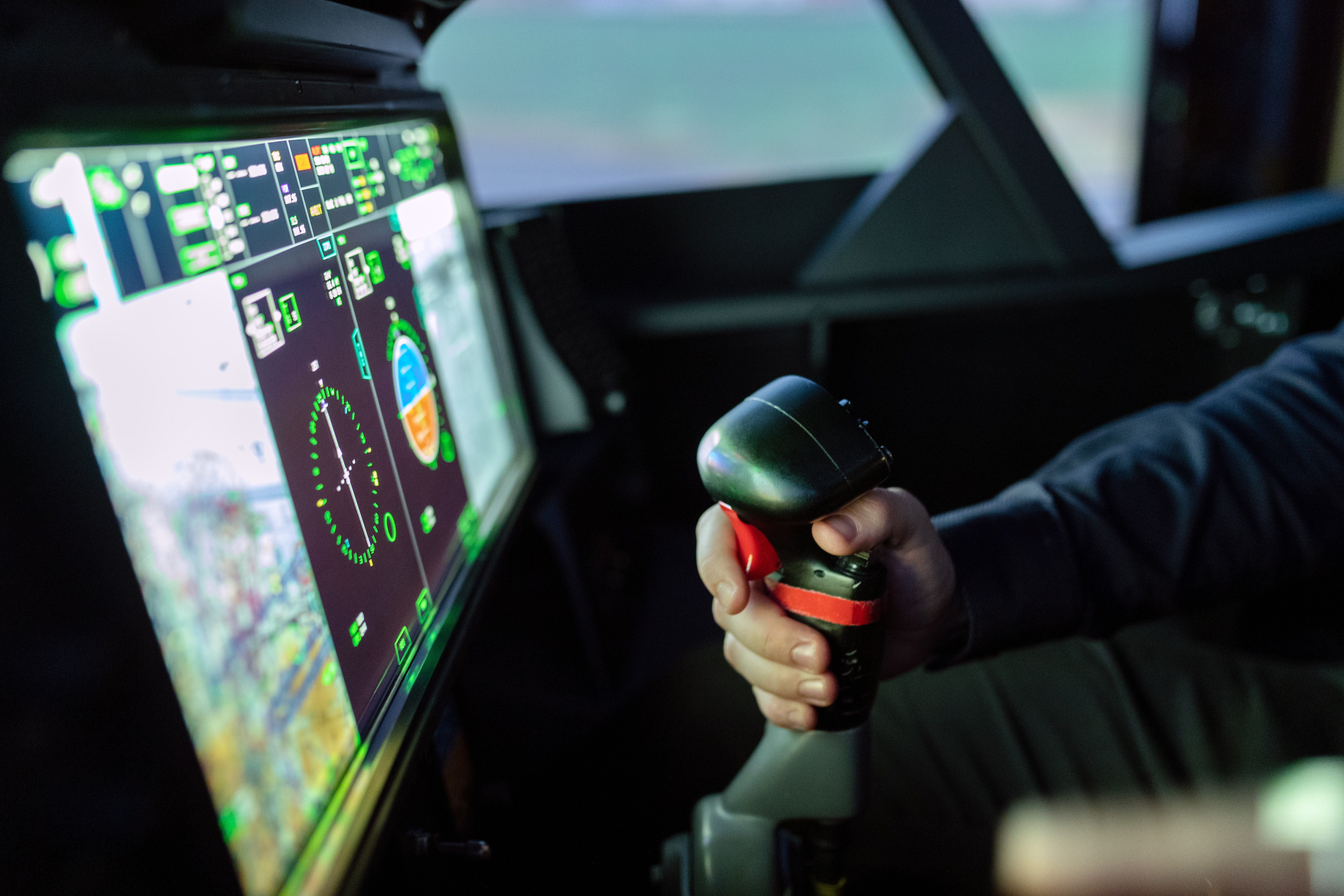
Featured image: Person Controlling Flight Simulator by ThisIsEngineering from Pexels