Since 2018, I’ve had the honor of participating as a faculty member in the Gaylord College study abroad program to Arezzo, Italy. Of course, the COVID-19 pandemic impacted Italy early and severely. As a matter of fact, one of the first “calls” made at the University of Oklahoma was bringing home our students who were studying abroad in Italy for the Spring 2020 semester. A natural later call was to cancel all summer study abroad programs, including ours, which I wrote about in one of last blog posts.
Fall 2020 rolls around and Debbie Yount and I do what we always do which is start recruiting for the next summer’s cohort which caps at 23 students. We allowed any student who wasn’t graduating to leave their program deposit to hold their spot for 2021, and those nine students gave us a decent head start on recruiting. We had recruited fairly regularly in the Fall with probably a dozen or so students when we were given notice in January that, while summer study abroad programs hadn’t been cancelled, they were setting odds at virtually zero that we would get the clearance to go from an advisory committee to travel.
March 2021 rolls around and we get word that, in fact, summer study abroad is on with the condition being that all students must be vaccinated and final rosters are due in a week (!). We race to fill the remaining spots through social media promotion and classroom visits and, luckily enough, were able to get enough students to make a full boat.
In a normal year, more than a dozen OU groups make their way to Arezzo to study abroad during May, June, or July sessions. We would come to learn that every program had cancelled due to a number of reasons except for our June program and one July program.
We would be the first large group to study abroad since the pandemic.
Even more so, Italy was still in lockdown. Italy abides by a color coded map that looks at the average number of COVID cases and assigns the region a color of white (least), yellow, orange, or red (most cases). At the beginning of April, with a scheduled departure date of June 7, Tuscany was in the red. This meant that masks were required inside and outside at all times, restaurants were closed except for takeout, you were not permitted to leave the region, group visits weren’t permitted, shopping centers must remain closed on weekends, museums were closed, public transport was limited to 50%, and there was a region wide evening curfew.
Despite the gloom outlook, we continued to push forward. On paper, the situation did not look good but we knew we had two months for it to improve. We had just seen the situation in the US dramatically improved from January to April, so we had reason to believe that Tuscany to at least get to “yellow” before we arrived. That would mean that the only restrictions that would remains were masks, a slightly later curfew, and social distancing measures.
The other situation that we were trying to maneuver was getting into the country. At this point in time, Italy was not allowing tourists into the country, but they were allowing you to enter if you were studying. We had students bring a proof of enrollment form, a self-declaration form justifying travel in Italy from abroad, a letter attesting to OU Arezzo’s Certification with Ministry of University and Research, OUA’s certification of membership in AACUPI, as well documentation showing that they were vaccinated and had recently tested negative for COVID-19.
Further, Italy was requiring a mandated seven day quarantine unless you were entering into the country on what was called a “COVID-tested flight.” Because we didn’t have time built in to a month-long program to quarantine students for the first week, we had them book seats on these flights to bypass quarantine restrictions. COVID-tested flights required that everyone complete a PCR test prior to coming to the airport, completing a rapid antigen test at the airport in Atlanta, and then completing a third rapid antigen test once they landed in Rome.
Reflecting on this now, I am not sure how we navigated all of the hurdles that were laid out in front of us. Each one was its own unique obstacle to solve. For example, our flights were on a Monday and the PCR test had to be completed within 72 hours of departure. This meant that they needed to be taken on Friday or Saturday. The predicament here was 1.) finding students places to complete a PCR test when testing centers were becoming harder to find as they were adapting into vaccination centers and 2.) getting results back in time as most testing centers would only guarantee a 3-5 day turnaround. I was particularly worried about labs being even slower on the weekends. But we were able to get the on campus health center, Goddard, to set up a private testing event (even though they had stopped doing COVID testing already since it was the summer) and assured us students would have results in time.
By April 15, Tuscany went from red to orange and then on April 26, Tuscany went from orange to yellow allowing restaurants and museums to reope. By mid May, shopping centers were allowed to open beyond the weekends.
By the grace of God, we had time it perfectly for an early June arrival. We landed as the COVID cases numbers were falling, were on the ground during Italy’s lowest case numbers, and then departed right as the Delta variant was starting to rear its ugly head.
I feel incredibly lucky. I have more to write about the experience itself, which I hope to get to eventually, but I am most proud of the students and their families who were willing to put trust their in myself and the OUA staff who assured them we were going to do everything we could to provide the safest study abroad experience.
This year was different for the students for obvious reasons, but you could visibly see the appreciation on the students’ faces. After a year and half hunkered down, it was clear that they were taking the time to really soak in the experience. I’ve now done the trip enough to draw joy from anticipating students reactions to turning a corner and seeing a sight such as Florence’s Duomo. Watching the students experience Italy’s beauty ina time when it was waking back up from a two year slumber was really something special.
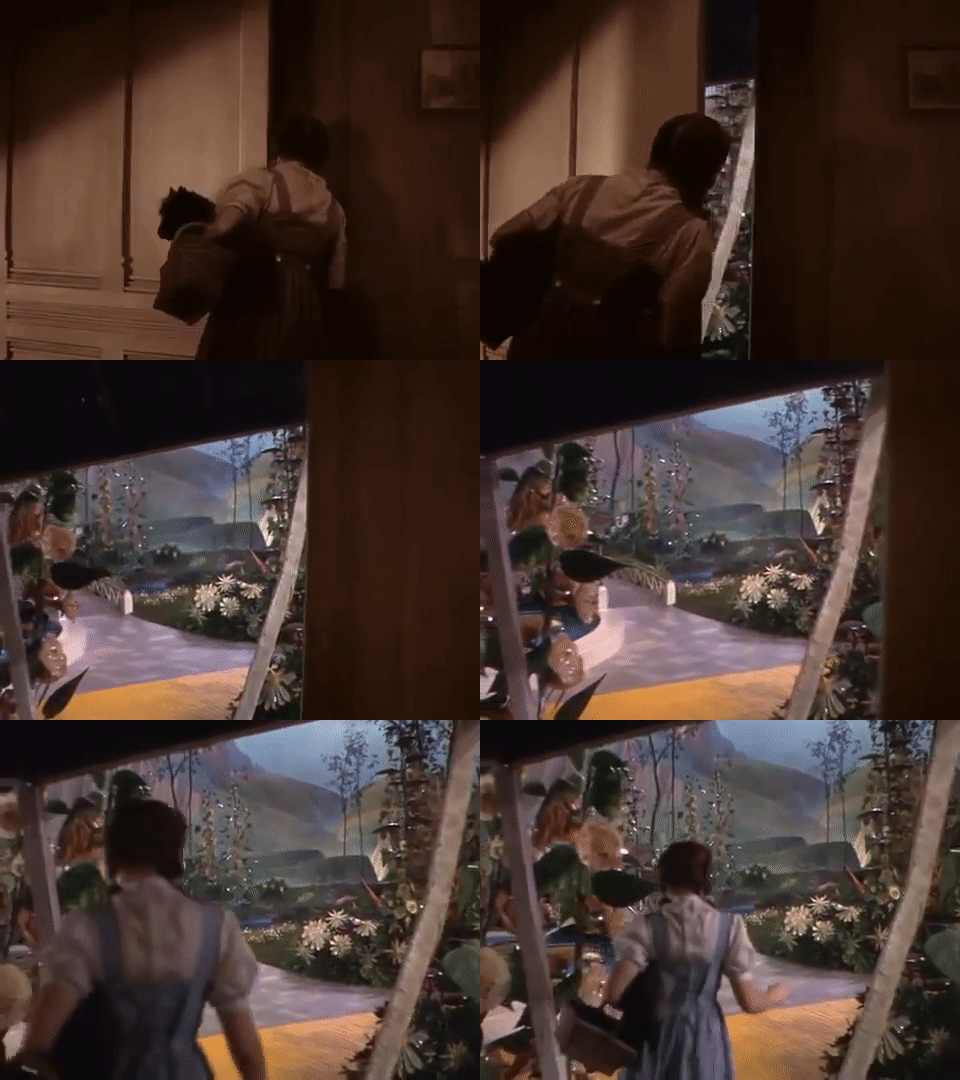
And that’s why I love my job. It’s why I love higher ed and why I love study abroad. I get to lead Dorothy as she enters the land of Oz and goes technicolor.