
I was asked at the last minute to step back into teaching Intro to Advertising this fall, and I am genuinely, a little embarrassingly, thrilled about it. It’s a real honor, in part because it’s the introduction to our major sequence. I haven’t taught it since I stepped out of my faculty role in Spring 2024, so there was a beat of pure excitement. And yet, almost immediately, there was a second and quieter thought: how much of what I said back then is still true?
That second thought is the reason I ended up spending a good chunk of my weekend doing something I’ve never really done before, which is a full, honest audit of my own course before teaching it again. Luckily, I’ve got some buffer time between now and the start of the term to give put some of the lectures through a few sessions of rehab.
Anyway, here’s the thing about advertising as a subject. The fundamentals are ancient (persuasion, attention, trust, etc.) but the surface is molting constantly (more on why later). And the stretch between Spring 2024 and Fall 2026 turns out to be one of those stretches where the surface didn’t just molt, but it kind of turned inside out. The last time I taught this class, generative AI in advertising was a thing you mentioned — a curiosity, a “keep an eye on this.” It is now, in the most literal sense, how a lot of the work gets made and bought. There’s perhaps some commentary to add about whether that’s right or wrong, but now is not the time for that. I feel it’s my duty to articulate and reflect the industry as it is. And while generative AI is not the only thing that moved, it’s the one that made me realize the version of the course sitting in my files was a time capsule from a world that, in advertising terms, has largely already left.
So before I say anything about what needs fixing, I want to talk about the part I didn’t touch. Because you can’t understand what I’m retooling until you understand what the course actually is.
The course is a bunch of stories
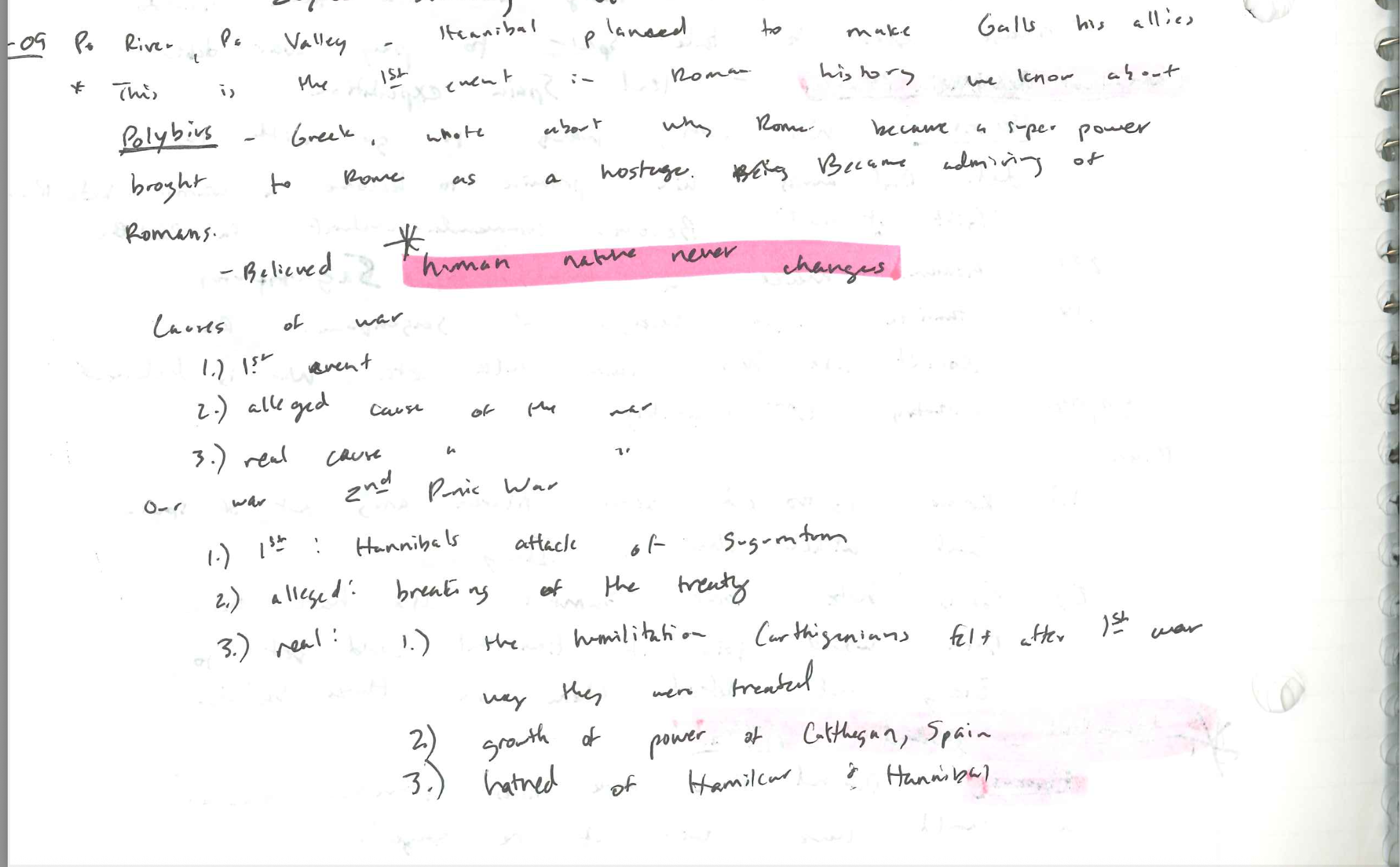
My Intro to Advertising course is, structurally, about twenty lectures. And nearly every one of them is built the same way: I take a single concept that the students absolutely need to walk out understanding, and I weld it to a story from the history of advertising. These stories aren’t just window dressing but they are the delivery vehicle. I landed on this approach in the summer of 2018 when I was first prepping the course. I bought about a dozen books, including this wonderful little book called 20 Ads That Shook the World, and decided I wanted to take an approach styled after the way a professor I had in undergrad, Dr. J. Rufus Fears, approached his lectures. Fears was a bit of a legend at the University of Oklahoma. He was the David Ross Boyd Professor of Classics who held the Blankenship Chair in the History of Liberty, and a three-time Professor of the Year whose “Freedom in Greece” and “Freedom in Rome” courses were so oversubscribed there wasn’t a lecture hall on campus big enough to hold everyone who wanted in. To take a class from Dr. Fears was to enter a different world. I once described it as listening to one of Homer’s epic poems. I took both of those Freedom classes from him, and each one was a single long narrative. Interspersed through it were the concepts, the key battles, and — more importantly — the human truths he wanted you to walk away with, and he wanted you to hold all of them equally. The human-truths part was the special part. In my notebook, I’d put a big asterisk next to those. “Human nature never changes.” “A great leader elevates people.” “The greater you are, the more dangerous you are to the mediocre.” “Vae Victis – Great powers rise and fall.”
So I decided I would take several of the stories in that book and interweave them with the course content. Before we define a single term, we spend the hour with P.T. Barnum. The humbug museum, the “come see the mermaid from Fiji” that turns out to be a monkey’s head sewn to a fish, the advertising coach he’d send into town two weeks before the circus. And by the time we’re done, the students haven’t just heard a fun story about a nineteenth-century showman, but they’ve also quietly absorbed what advertising fundamentally is, the difference between direct and delayed response, why brand loyalty makes people less sensitive to price. Barnum is the spoonful of sugar and the definitions ride in on his back.
And then it just keeps going, week after week. We do Lydia Pinkham and her vegetable compound to understand what a brand even is and why brand equity is a company’s most precious asset. We do Claude Hopkins convincing an entire country to brush its teeth with Pepsodent to get at positioning and the “reason why.” We do De Beers and “A Diamond Is Forever” — a made-up tradition, invented practically out of thin air by a copywriter named Frances Gerety who scribbled the line half-asleep — to teach research, because that campaign started with a year-long study of what people actually believed about diamonds (which was: nothing good). We do the Coca-Cola Santa Claus, painted by one man for over thirty years, to talk about creativity. Bill Bernbach and Volkswagen’s “Think Small” for copywriting. The Marlboro Man for art direction. Miss Clairol’s “Does she… or doesn’t she?” to walk through building an entire campaign from a blank page. Absolut for media strategy. And we close the modern era with Apple’s “1984” and Nike, because you can’t end the story of great advertising at a vodka bottle in 1985.
Here’s my actual pedagogical thesis, the thing I believe in my bones after teaching this for years: students do not remember bullet points. They do not remember “the four Ps” as a list. But they remember the guy who bought newspaper space cheap by haggling, sold it back to the client high, occasionally didn’t run the ad at all, got caught, got fired, and whose absence cratered the company’s sales by eighty percent. So the concept of how the advertising industry is structured rides into their memory on the back of that guy. The story is load-bearing.
The pendulum
If I’m being honest, the stretch of the course I love most is the 1960s and the Creative Revolution. Because that’s where I get to tell the story of advertising as a genuine fight over what the whole enterprise even is and I get to tell it through four men (who some would say were mad).
On one side you have Rosser Reeves, the great champion of advertising-as-science. Reeves believed an ad was a machine with a job to do, and the job was to hammer a single Unique Selling Proposition into your skull through sheer repetition. He said, more or less, that once you’d found the USP the rest was just wordsmithing — any competent writer could execute it. He tested everything. He is the hard-sell, reason-why tradition that runs straight back to Claude Hopkins, taken to its most ruthless conclusion.
And then the revolution. Bill Bernbach walks in and says, essentially, no… advertising is an art, persuasion is an art, and the moment you reduce it to a formula you kill the thing that makes it work. His agency put the art director and the copywriter in the same room for the first time, and “Think Small” is what came out of that room. David Ogilvy sits somewhere in the beautiful middle: a man who worshipped research (he’d worked for Gallup) but also put an eyepatch on the Hathaway man for no reason other than that it made you look. And Leo Burnett, up in Chicago, mines what he called “inherent drama” (the Marlboro Man, the Jolly Green Giant, Tony the Tiger) the warm, mythic, unmistakably human side of the whole business.
Science and art, arguing. And here’s the frame I’ve always used to make sense of it for students: advertising is a pendulum. It swings back and forth between the two, and what pushes it isn’t a theory but rather society/the audience. It swings toward whatever is cutting through at the moment, and it swings away the instant people go numb to it. Barnum’s carnival hard-sell gives way to the quiet, charming, believable copy of the reformers. That gives way, eventually, to Reeves hammering his USP. Reeves gives way to Bernbach’s wit. Back and forth, decade after decade, science and art, science and art.
Two years ago, the last time I taught this, I told the students we were living in a science era. And we clearly were. As I understood it, the whole industry had tilted hard toward data with targeting, programmatic buying, performance marketing, measure-everything and optimize-everything.
But over the last year, I’ve started to hypothesize if the pendulum is starting to swing back.
Which feels almost silly to say out loud, because the defining technology of this moment is AI, and “prompt engineering” sounds like the most science-brained phrase ever coined. But hear me out, because I don’t think it’s the tools that decide which way the pendulum points, but rather it’s the conditions, and the conditions are quietly shifting in favor of art. Two of them in particular. The first is that advertisers are losing their controls: the precise, surgical levers that made the science era feel so powerful are getting pulled out of their hands (some by privacy changes, some by the simple fact that when you hand the buying over to a machine, you are no longer the one steering). The second is that the clutter is becoming genuinely impossible. When anyone can generate infinite semi-competent content in seconds, competent stops being a differentiator. The floor gets so crowded that the only way up is the thing the machine still can’t reliably do, which is surprise you, move you, be weirdly and specifically human.
So maybe it’s a backlash to AI. Maybe it’s just the pendulum doing the only thing it’s ever done. I honestly don’t know yet, and I suspect the students and I will be sitting with a question rather than an answer this fall. But my gut says that as the science of advertising gets automated, the art of it becomes a bigger player in the ballgame. Which would mean the stories that I love teaching most (the people who fought this exact fight sixty years ago) are suddenly, unexpectedly, more relevant stories in the course. Again.
But isn’t lecturing kind of bad?
I can already hear the objection, because it’s a fair one: the “lecture” does not exactly enjoy a reputation as the pinnacle of sound, 21st Century pedagogy. And if this course were just me talking for seventy-five minutes three days a week, I’d share the worry.
Two things, though. The first is a boring, honest constraint: this is a 120-person class. Whatever their limits, lectures scale, and a room of 120 is not a seminar no matter how badly you or I want it to be. So my job is to make the lecture the best possible version of itself, and for me that means the storytelling because a good story is one of the few formats that can genuinely hold 100+ people at once.
The second, and the more important one, is that the lectures are only one leg of the course. But scattered across the semester are case-study days, where the students stop listening to me entirely and go to work in small groups on a real, current problem. For example, in Spring 24 I had a Crocs case. Teams get handed transcripts of interviews with two very different Crocs audiences: the “Feel Goods” (suburban parents buying for comfort and durability) and the “Explorers” (younger, urban, buying Crocs as fashion). And they have to mine a genuine consumer insight out of those transcripts (my favorite that a group once surfaced: nobody sees your shoes on a Zoom call, so remote work quietly changed what a shoe is even for), then turn it into a real positioning statement (for [this target], Crocs are [this claim] among all [this competitive frame] because [this support]) before recommending where the ad dollars should go and roughing out an ad concept.
And bolted onto the side of all of it is a skills layer that has nothing to do with lecture at all. I wrote a whole separate post about how that went (the 100-person class earned 123 certificates the month I first tried it), so I won’t relitigate it here. But it’s the piece that makes sure students leave with a few things in their hands, not just in their heads.
So, yes, I lecture. But the storytelling lecture is the engine, not the whole vehicle. And it also happens to be the one part of the course that can quietly rot. The lectures are the part where I’m the single point of failure. Which is exactly why, when I finally sat down to audit this thing, that’s where I pointed the flashlight. The temptation, when you love a thing, is to either defend all of it or panic and blow it up. Neither felt right.
The audit
I did this audit with AI as a collaborator, which I’ll admit has a certain irony to it that I’ll come back to. More specifically, I used Claude Code and the Opus 4.8 model.
I didn’t want to work from my memory of the course, because my memory of a lecture and what I actually said in that lecture are two different documents, and only one of them is real. So I started from the real one. I pulled every lecture transcript I had (I recorded all of them back in the Summer 2020 for the dreadful year of remote teaching) which came out to somewhere north of 63,000 words across the 20 lectures. I also pulled my Spring 2024 slide decks. And then, lecture by lecture, I worked through all of it with Claude: here’s what I said, here’s what I showed, here’s the concept I was actually trying to land. What’s still true? What’s quietly become false? What’s missing entirely?
That transcript-first approach turned out to matter more than I expected, because it kept catching me being more current than I remembered being and, in a couple of painful spots, less. You find out quickly which parts of your teaching are living and which parts are a fossil you’ve been carrying around because it worked once.
The output of all that is a stack of documents, which is one for each lecture, plus a few that sit on top and try to see the whole thing at once.
A retool, not a rebuild
The bones are good. That was Claude’s finding at least. So that was a relief.
The way I’ve started describing it to myself is that this is a re-plumbing job, not a demolition. The stories are the load-bearing structure of the house, and the stories are relatively timeless. “A Diamond Is Forever” is not going to stop being one of the great illustrations of what advertising research can do. So those walls stay. What runs through the walls (the data, the examples, the specific mechanisms I use to explain how the industry works right now) some of that is corroded and needs to be swapped out.
Which is a genuinely different and more manageable job than “rebuild the course.” The rule I kept coming back to was swap, don’t stack. My lectures are already full. Each one is about sixty minutes of a seventy-five-minute class, because I’ve learned the hard way that I lose the room after an hour and I need buffer. So the answer to “the industry changed” cannot be “add twenty minutes of new material to every lecture” — that’s how you get a bloated class where students zone out because you’re just firing concepts at them. The answer, mostly, is to pull out the slide that’s teaching a dead fact and drop in the one that teaches the live version of the same idea.
But some of it isn’t a swap. Some of it is a real reckoning.
What actually changed out from under me
A few things happened in advertising (lol) between the last time I taught this and now, and they’re big enough that teaching around them isn’t an option.
The first is the one I already mentioned: generative AI stopped being a topic about the industry and became part of the plumbing of the industry. It writes copy, it generates and iterates images and video, it runs media buys. I can’t teach the creative process, or copywriting, or research, as if the human does all of it from a blank page anymore. The honest version now includes “and here’s what the machine does, and here’s what’s left that’s yours.” Which, for a room full of students who are anxious about exactly that question, is not a footnote. It’s one of the most important conversations in the class.
The second is that the way advertisers know things about people broke. For most of the last decade, the operating assumption (and the one baked into my lecture about digital media) was that advertisers can follow you around the internet and know essentially everything. That’s the model I demonstrated, live, using my own ad-preference profiles. And then Apple let people turn it off, and the industry-wide plumbing that made that possible started getting pulled out, and the whole thing became a much more constrained, consent-gated, first-party-data game. My digital media lecture, I’ll just say it plainly, is the most out-of-date hour in the course. Parts of it teach how the industry used to work with a straight face.
And then there’s a cluster of structural stuff that a student genuinely cannot leave an intro course in 2026 not knowing. “TV” now mostly means streaming, bought through the same automated systems as everything else. The tidy old wall between “traditional” and “digital” media that I still lean on is basically gone. Some of the biggest advertising companies in the world are now retailers (Amazon, Walmart) selling ads against what they know about your shopping. And the creator and influencer economy went from a novelty slide to one of the main ways brands reach anyone, and one of the main places my students will actually go get jobs.
The document I’m most glad we made
The thing I keep returning to out of this whole exercise is one document in particular, and it’s the one that reframes the audit as something other than a list of my sins.
It’s a competency and readiness map. On one side, it lays out what a student reliably leaves my course knowing. They can define advertising and explain how it works as both communication and business, they understand brands and brand equity and positioning, they can reason through the ethics of the field analytically instead of just reacting, and they hold the working vocabulary of every specialized area they’ll go on to study: the research process, the elements of copy, the principles of design, the fundamentals of media planning, and the complete anatomy of a campaign plan.
And on the other side, the same document does the harder thing: it says where students will be behind when they walk into the next courses if I leave the course as-is. Where the gaps are. A couple of them are specific and cheap to fix. There are pieces of copywriting for video and audio I don’t currently cover that I really should. Some of them are the big industry shifts I just described, concentrated in the tracks that feel them most, like media buying. It’s an assessment of what students get and what I owe them, in the same file.
That’s the thing I didn’t have before and really wanted: not a vague sense that “I should update this,” but an honest, specific, point-in-time picture of exactly where this course stands in the summer of 2026, before I attempt to roll up my sleeves and rebuild it for fall. A photograph of the course as it is, gaps and strengths in the same frame, so that when I am done retooling it I’ll actually be able to see what changed.
The part I promised to come back to
I used AI to audit a course that now has to teach students what it means to use AI.
I don’t think that’s a gotcha, and I don’t think it’s cute. I think it’s just genuinely what this moment is. The most useful collaborator I had in figuring out how my advertising course needs to change is the same technology that changed my advertising course. That’s not a paradox to resolve; it’s just the water we’re all swimming in now, and pretending otherwise in front of a room of twenty-year-olds would be its own kind of malpractice.
What the whole exercise really reminded me of is that a course you love is not a monument. It is a living thing, and the price of getting to keep teaching the stories you love is that every so often you have to crawl back under the house and replace the pipes. The stories are why the class lasts. The retooling is the rent I pay to keep telling them.
And I get to tell them again this fall, which, when I zoom back out past all the gap analysis and the readiness maps, is the only part my gut actually cares about. I’m really looking forward to it.